Open Today Sales: 9 AM-7 PMOpen Today Service: 6 AM-7 PM
Appearances may be deceiving when it comes to crossovers like the 2020 Toyota RAV4 and the Mazda CX-5. Though they may look similar, details magnify which car best suits your needs near Danvers, Peabody, and Salem, MA.
In the following crossover comparison, Ira Toyota of Danvers gives you the scoop, so you can make an informed decision.
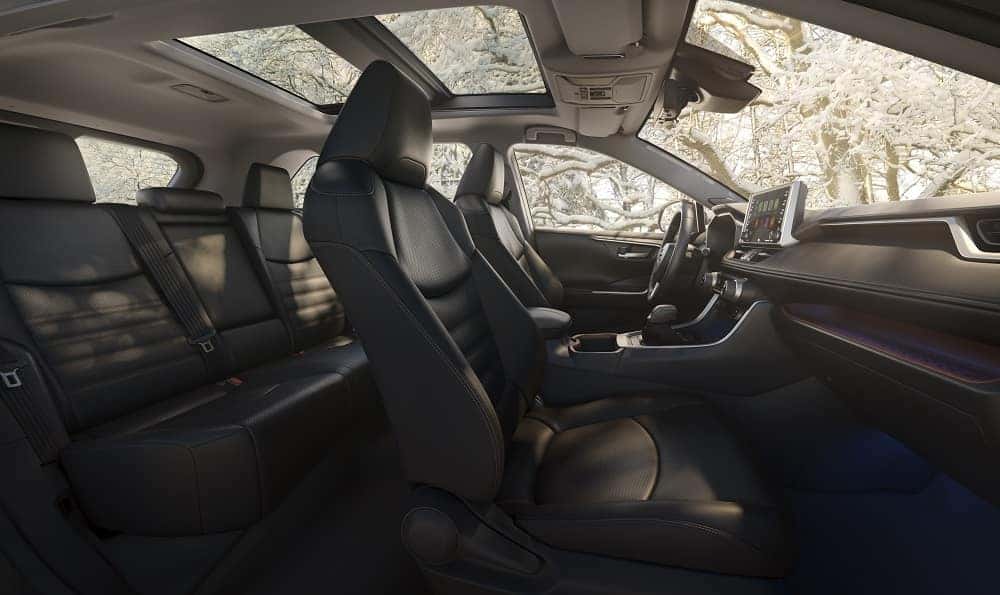
A versatile vehicle like an SUV can serve as a commuter car or weekend road-tripper. Whatever box it fills, you want to be assured that you have enough space to store luggage, grocery bags, sports equipment, and zillions of other things.
Below, see the differences in cargo volumes between both cars:
|
Cargo Capacity |
All Seats Up |
Seats Folded Down |
|
Toyota RAV4 |
37.5 cubic feet |
69.8 cubic feet |
|
Mazda CX-5 |
30.9 cubic feet |
59.6 cubic feet |
Both the Toyota and the Mazda offer a power liftgate and a power rear liftgate respectively, but while the RAV4 provides it as a standard feature, it is only an option in the CX-5.
Integrate your smartphone to connect to loved ones or work, stream any apps you need, and view your text messages on the available 8-inch touchscreen. In the RAV4, this tech perk comes standard, while it is available in the CX-5.
For music lovers, you can opt for the Toyota 11 JBL® speakers to immerse yourself in crystal-clear sound. In the Mazda, the available Bose® audio sound system uses 10 speakers.
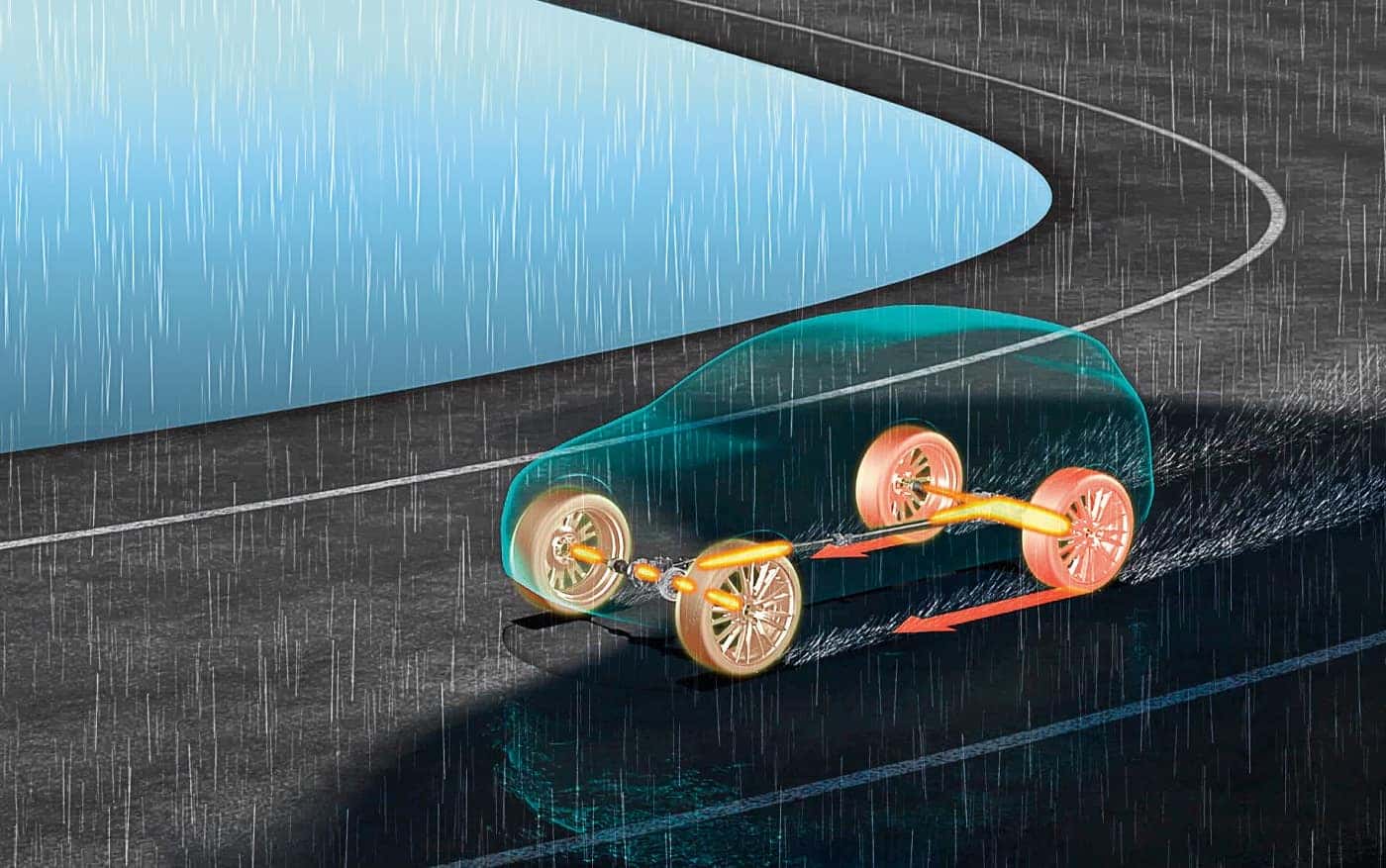
Many Toyota and Mazda safeguards come standard and are very similar, but the RAV4 tops the CX-5 with standard Lane Tracing Assist and Road Sign Assist.
The Toyota also comes with standard Trailer Sway Control if you hook up a trailer. Mazda does not have this device, either.
These SUVs take consideration when figuring out what conveniences you want. You can get the following features in both the RAV4 and the CX-5:
The difference is that in the Toyota, these items are standard, but in the Mazda, they are only optional. If you like to charge your phone free from wires, you can add the extra wireless charging pad into your RAV4, but not in the CX-5.
Also, you can get a moonroof in both vehicles, but you can upgrade it to an available panoramic glass roof in the Toyota.
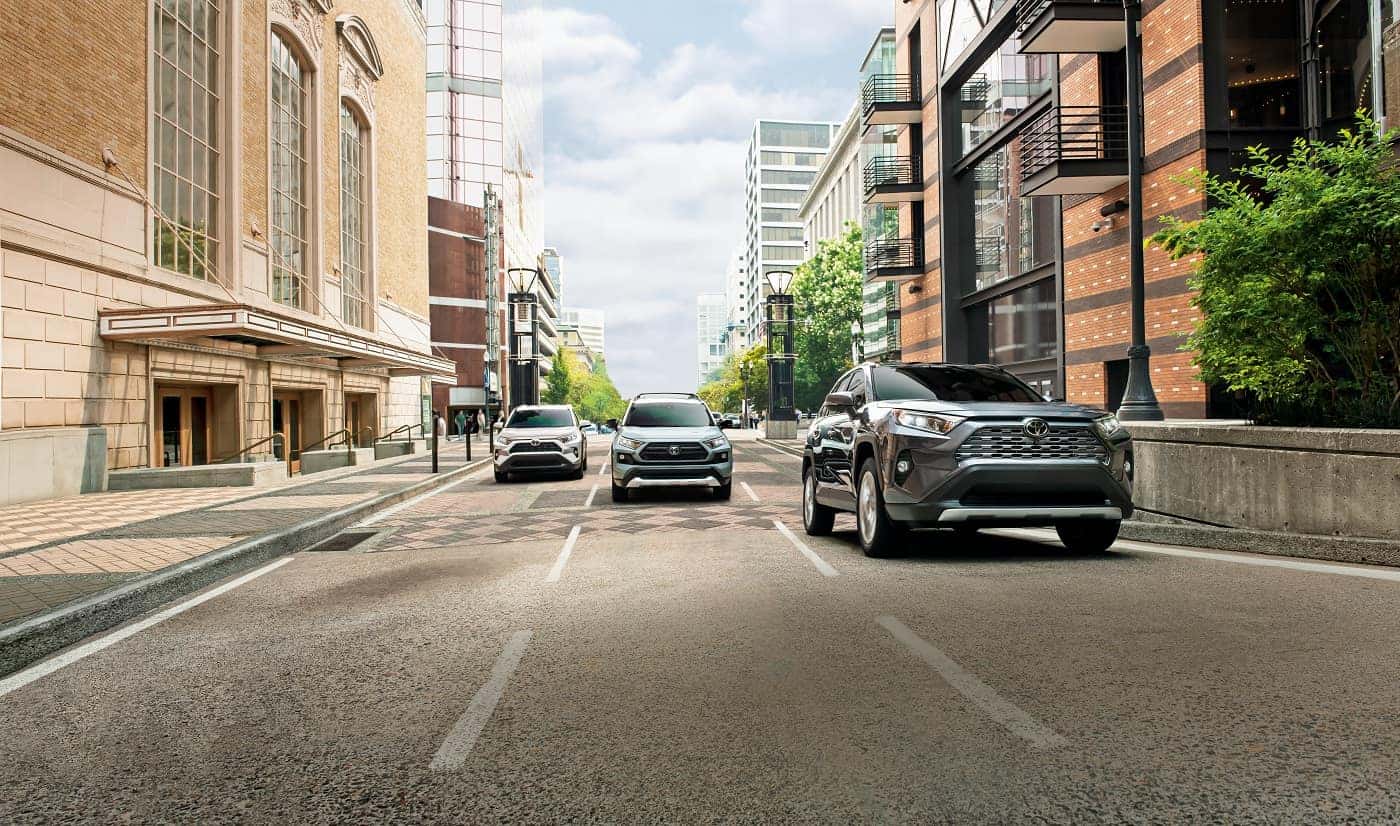

We cannot forget to mention each SUV’s performance. While the separate fuel economies appear comparable, the differences are apparent. Let’s review:
|
EPA-Estimated Gas Mileage |
FWD |
AWD |
|
Toyota RAV4 |
27 city/35 highway MPG or 28 city/35 highway MPG1 |
25 city/33 highway MPG or 25 city/32 highway MPG1 |
|
Mazda CX-5 |
25 city/31 highway MPG2 |
24 city/30 highway MPG2 |
You can drive 435 miles on one tank with the RAV4, while you may need to refuel faster in the CX-5. It has a gas range of 367 miles.
If you’re looking for a rugged set of wheels, the Toyota can pass over 8.6 inches of ground clearance, while the Mazda skirts 7.5 inches.
The RAV4 includes three standard driving modes, such as Eco, Normal, and Sport, and you can select four—like Mud and Sand, Rock and Dirt, Snow, and Normal—in the available Multi-Terrain Select. The CX-5 gives you two modes including Normal and Sport and an Off-Road Traction Assist option.
SUVs like the 2020 Toyota RAV4 and the Mazda CX-5 may look similar, but once you get into the details, you can really see the differences.
If you’re shopping for a new car near Danvers, Peabody, and Salem, it helps to know what to expect. For an in-person demonstration, schedule your test drive with Ira Toyota of Danvers.
1 2020 RAV4 EPA-estimated 27 city/35 highway/30 combined MPG for LE FWD and Limited FWD; 27 city/34 highway/30 combined MPG for LE AWD; 28 city/35 highway/30 combined MPG for XLE FWD and XLE Premium FWD; 27 city/33 highway/29 combined MPG for XLE AWD and XLE Premium AWD; 25 city/33 highway/28 combined MPG for Adventure; 25 city/32 highway/27 combined MPG for TRD Off-Road; 25 city/33 highway/28 combined MPG for Limited AWD; and 41 city/38 highway/40 combined MPG for LE Hybrid, XLE Hybrid, XSE Hybrid and Limited Hybrid. Actual mileage will vary.
2 EPA-estimated mileage. Actual results will vary.